
Prior authorization: assemble the packet, preserve the judgment
An incomplete request and a pending payer decision need different next actions. This illustrative design separates document readiness, submission and follow-up so an administrative team can see what is waiting and who owns it.
Worked example. This is a proposed solution for a fictional operating scenario, not a client engagement. No measured results are claimed.

- The problem
- An authorization queue can hide missing documentation, unanswered submissions and requests awaiting clinical review in the same status.
- The approach
- Use a packet checklist, a submission ledger and an exception queue with named administrative and clinical owners.
- Intended outcome
- The intended outcome is clearer follow-up and fewer avoidable completeness errors. This is not a deployed healthcare engagement or a clinical decision system.
Example system roles EHR work queue · approved document store · supported payer interface
The scenario has a narrow boundary
Assume a provider's administrative team prepares authorization requests from an EHR queue. Staff gather documents, check the payer's current submission requirements and follow up on outstanding requests. A shared spreadsheet makes it hard to tell whether a request is incomplete, submitted or awaiting a response.
The proposed automation organizes administrative work. It doesn't determine medical necessity, approve care, or decide whether a patient should proceed with treatment. A payer acknowledgment also isn't an authorization approval.
Model the packet before connecting the portal
Use an internal request ID with a minimum necessary reference to the patient record, payer, requested service, intended date and responsible staff member. Store documents in the approved clinical environment; notifications should link to that environment rather than reproduce patient information.
The completeness checklist is payer- and service-specific. Record which version was applied and when a staff member last reviewed it. Missing documentation goes to the person who can supply it. Clinical ambiguity goes to the clinical team, not to a more permissive automated rule.
The technology choice depends on the actual payer interface, available access and organizational controls. CMS's interoperability program is relevant context, but it doesn't prove a given payer offers the endpoint your workflow needs today.
Proposed workflow
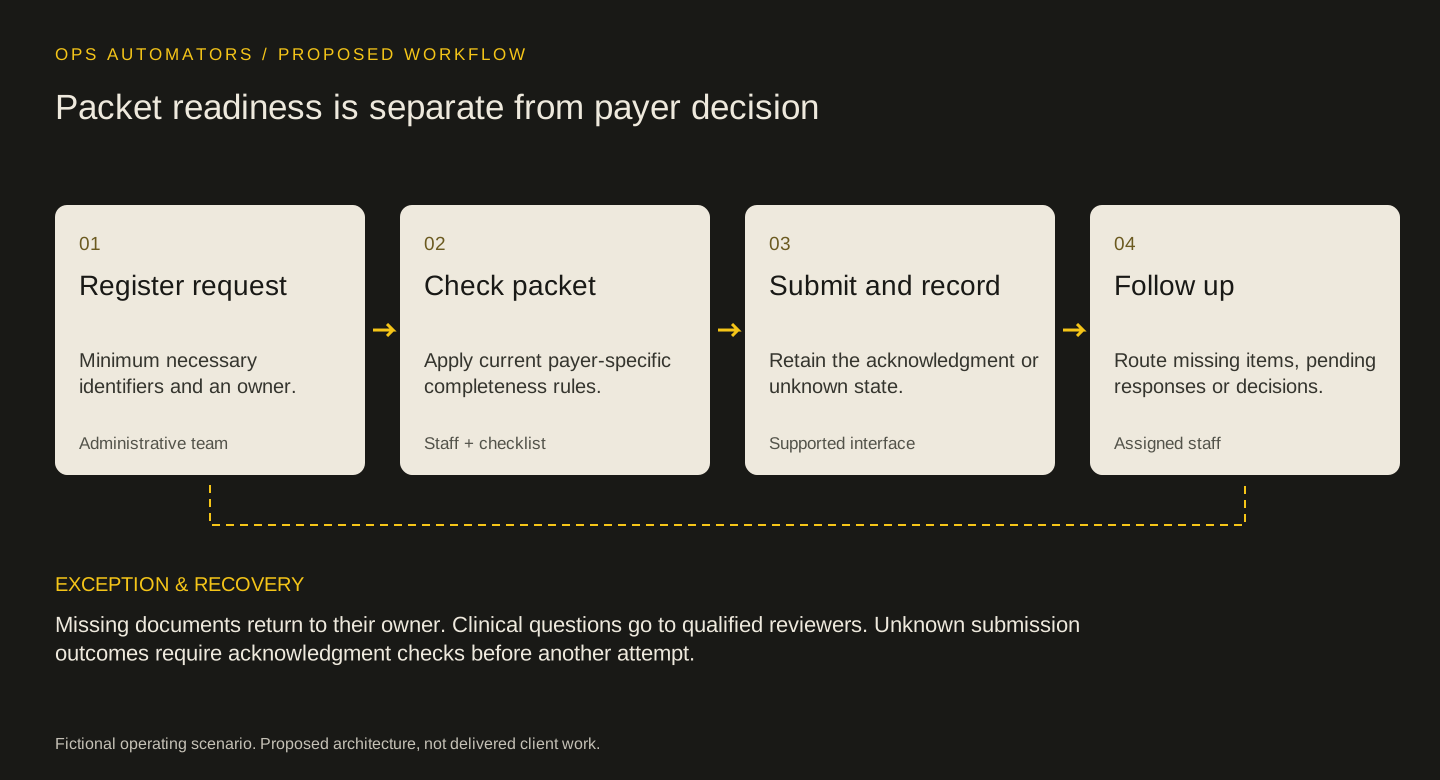
Packet readiness is separate from payer decision
Register request
Minimum necessary identifiers and an owner.
Administrative teamCheck packet
Apply current payer-specific completeness rules.
Staff + checklistSubmit and record
Retain the acknowledgment or unknown state.
Supported interfaceFollow up
Route missing items, pending responses or decisions.
Assigned staff
Missing documents return to their owner. Clinical questions go to qualified reviewers. Unknown submission outcomes require acknowledgment checks before another attempt.
A submission needs an acknowledgment trail
Create a submission attempt record before contacting a supported payer interface. Store the response identifier, timestamp and resulting state. If a timeout leaves the outcome unknown, check for acknowledgment before resubmitting; an uncertain response is not proof of failure.
For a portal-only payer, retain a staffed step unless authorized automation is suitable and can be operated reliably. This example doesn't promise universal portal automation, transferable credentials or a specific EHR connector.
Status checks should follow the interface's supported pattern and the team's follow-up policy. Persist the last successful check and the next action date so an outage becomes visible in the work queue.
Clinical review needs context, not a score
An exception record should state the blocker, the supporting record location, the owner and the next review date. Staff should be able to distinguish a missing attachment from a denial that needs qualified review. Escalation must respect the organization's existing urgent-care procedures.
Human reviewers decide how to handle clinical documentation, appeals and patient communication. Do not tell a patient that coverage is guaranteed because a technical submission succeeded.
Before a pilot, the organization must validate permitted data handling, vendor agreements, access, retention and the selected interface with its responsible teams. A diagram cannot establish compliance.
Measure administrative handling separately
A useful pilot would log packet-ready time, acknowledged-submission time and final-response time separately. Compare equivalent payer and service cohorts, record missing-data cases and report the observation window.
Measure administrative handling separately from the time a payer takes to decide. Without that separation, a change in payer response time could be mistaken for an effect of the workflow. No measured outcome or compliance certification is claimed here.
Keep this part
Authorization exception matrix
Give every pending request a reason, an owner and a next action before adding another status poll.
| Queue state | Next action | Responsible role |
|---|---|---|
| Missing documentation | Request the named item and retain a due date | Administrative coordinator |
| Clinical ambiguity | Review the clinical record in its approved system | Qualified clinical reviewer |
| Submission outcome unknown | Check acknowledgment before retrying | Submission owner |
| Payer response overdue | Follow the agreed escalation procedure | Authorization lead |
| Decision received | Verify scope and validity before communication | Authorized staff |
Use the example to agree the rules, then fill in the blank sheet with your own records and owners. Downloads are free; no email required.
Evidence & limits
How to evaluate the proposal
Separate staff handling minutes from elapsed payer response time. Count requests by payer and service, disclose exclusions, and report the baseline and pilot dates. Faster internal handling alone does not establish faster authorization.
- No real patient data or healthcare engagement evidence was used.
- Payer support, organizational approval and qualified review are prerequisites for implementation.
- This is administrative workflow design, not medical guidance, payer approval or a compliance assessment.
Sources & implementation context
- CMS interoperability and prior authorization program
Policy context only. Confirm the interfaces and requirements that apply to the organization and payer.
The design decisions and worksheets are original worked-example material. Vendor documentation supports specific platform behavior, not a claim that this implementation has been delivered.
How this page was prepared
AI assisted the research, drafting and conceptual artwork, helping compare source material and turn the workflow into a reusable worksheet. The scenario is fictional and the design is a proposal. The stated sources and limitations define the evidence available. No independent expert review or client result is implied.
About the team commissioning this collectionContinue with the useful detail
Where this connects.


Your next step
Which part of your authorization queue is waiting?
Start with a de-identified process map and a list of queue states. We can scope the administrative handoffs with your responsible teams.