
Keep it simple.
Remove the manual work. Build systems your team can operate and maintain.
About Ops Automators / Our values
Remove the manual work. Build systems your team can operate and maintain.
Start with how your team works. Shape the solution around your processes and the tools you already use.
Agree on what success looks like before building. Measure the time recovered, errors avoided, or work your team can now take on.
The people behind the work
Meet the people behind the workflows, data pipelines, and business systems we build. From the first process map to the final handover, each person has a clear part in getting the work done.
 ZachCEO and FounderAI architecture & technical deliveryView expertise
 CEO and Founder
Zach combines hands-on engineering with experience running technical delivery. He designs and ships the AI workflows, data pipelines, and business systems behind the work.
 RossAccount ExecutiveDiscovery & solution scopingView expertise
 Account Executive
Ross turns the first conversation into a clear brief: what is costing the team time, which systems are involved, and what a useful result needs to look like.
 LaurenProject ManagerTechnical delivery & launch readinessView expertise
 Project Manager
Lauren keeps implementation moving, with clear owners, visible dependencies, and acceptance criteria agreed before launch. Clients can see what is ready and what needs a decision.
 ArnoldLead ConsultantCRM architecture & business systemsView expertise
 Lead Consultant
Arnold translates operating processes into CRM architecture, with clear data models and business rules that support the people doing the work.
 JonathanLead ConsultantWorkflow automation & integrationsView expertise
 Lead Consultant
Jonathan connects the systems behind everyday operations, with explicit logic for missing data, failed requests, and the exceptions that need a person.
 MartinLead ConsultantData engineering & operational reportingView expertise
 Lead Consultant
Martin builds the data foundation for reporting and automation, so teams can trace a number back to its source and understand how it changed.
 DevonUX / UI DesignerUsable tools & clear interfacesView expertise
 UX / UI Designer
Devon makes complex workflows easier to use, from the first screen to the error message someone sees when a process needs attention.
 JeffOperations ManagerCapacity planning & delivery operationsView expertise
 Operations Manager
Jeff keeps the delivery operation organized, with a clear view of capacity, ownership, and the processes that let specialists stay focused on client work.
What we build
We bring process design, CRM expertise, engineering, and delivery leadership together. Our work helps B2B service businesses connect their revenue, delivery, and operations.
Agree on the revenue process, the decisions behind it, and the systems needed to put it into practice.
Put AI to work on documents and knowledge, backed by data pipelines and checks on the output.
Build the internal applications and reporting views that don't fit inside an off-the-shelf platform.
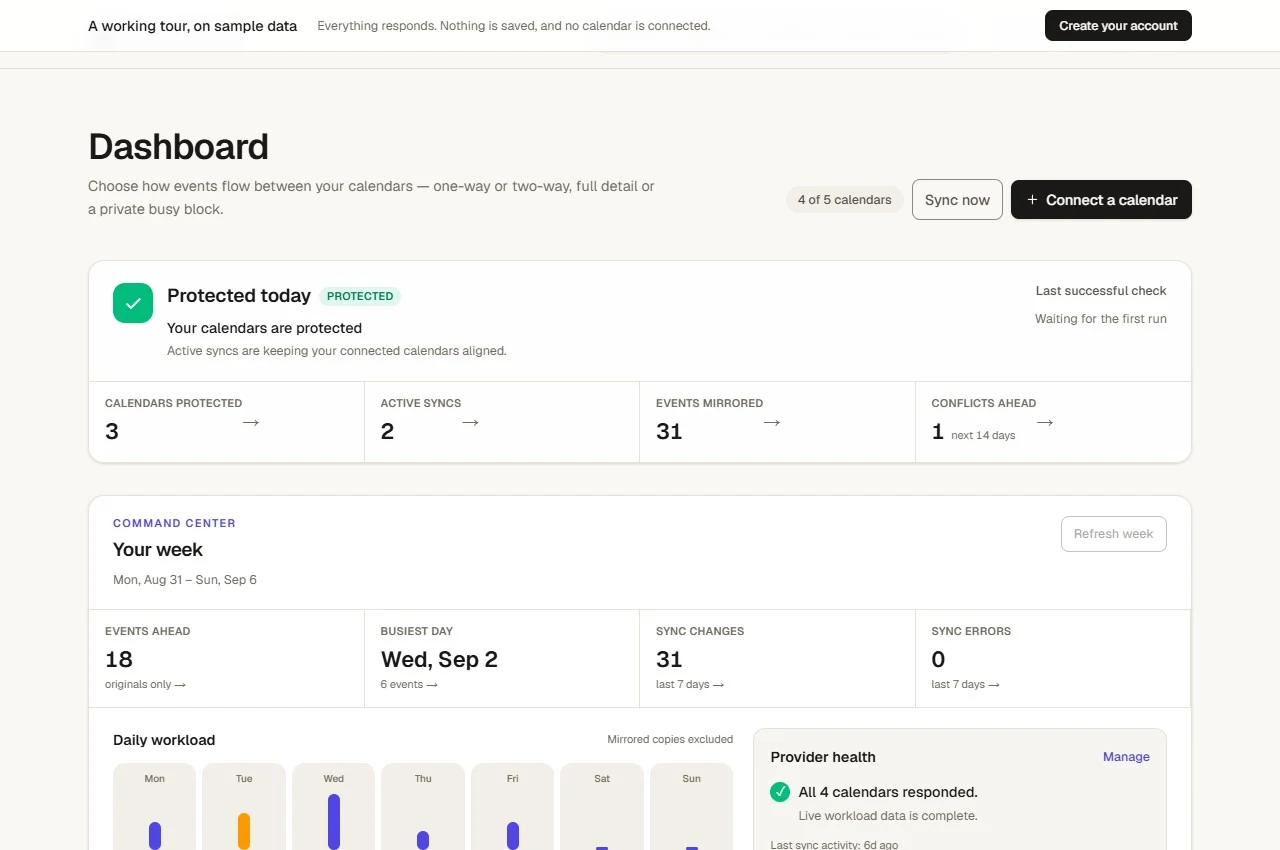
A calendar-sync product we run in production, built with Next.js, Postgres, and Stripe. Try the working tour to see the system in action.
Explore the productAutomation, CRM, payments, data, and the systems around them.
If your system isn't listed, bring it to the call. Integration patterns often transfer between platforms. Where a tool is new to us, we'll say so and account for the learning in the estimate.
 ZapierApp automation
 Tray.aiBusiness systems integration
 n8nWorkflow development
 HostingerWebsites and hosting
 SmartSuiteWork management
 CapsuleCRM and sales pipelines
 TranspondEmail marketing
 BrevoEmail and SMS automation
 ElevenLabsAI voice and audio
 JotformForms and approvals
 TextCustomer support and chat
 OrshotImage and document automation
How delivery works
Zach leads technical direction. Your project has named owners for the build and delivery, with a shared record of decisions and progress.
Our engineering standardsWe depend on this work, too. Billable runs our own time tracking, retainer balances, client portal, and invoicing.
Read the Billable build storyTrace the manual steps and the exceptions between systems. Prioritize the work worth automating; leave the rest alone.
Define the deliverables, acceptance criteria, and fixed price in writing. Scope changes get a separate decision.
Keep the code and hosting in your name. Test real failure cases, with retries and alerts built into the workflows.
Document how each workflow runs and what happens when it fails. Train the people who will operate and maintain it.
Before we talk
Who we are, how we work, and what you own at the end.
Read our 62 technical guides Find us on LinkedInA free 30-minute conversation about the work you'd like off your team's plate.