
A product-qualified lead needs an account and an owner
A product event isn't a sales opportunity. This worked example proposes an account-level handoff from product activity to a salesperson who can see why the signal matters.
Worked example. This is a proposed solution for a fictional operating scenario, not a client engagement. No measured results are claimed.

- The problem
- Usage alerts arrive without reliable account identity, context or a person responsible for follow-up.
- The approach
- Resolve the account, evaluate a versioned signal rule and create one reviewable sales task.
- Intended outcome
- The intended benefit is a more inspectable handoff. Conversion lift, revenue and sales-cycle improvements have not been measured.
Example system roles Product event stream · CRM · billing system · team notifications
Start with the decision sales needs to make
Assume a B2B SaaS business has a product event stream and a CRM. Product activity is frequent, while sales follow-up is selective. The previous process in this scenario forwards raw events to a shared channel; a rep has to identify the company, check its status and decide whether anyone is already talking to it.
The proposed handoff covers signal qualification and follow-up ownership. An invoice event can add account context, but it does not establish product interest or create revenue.
Make account identity the first gate
Carry product_account_id, event_id, occurred_at and event_type from the product into a staging record. Resolve product_account_id through a maintained CRM account crosswalk. Email domain is a clue for manual review, not enough to join a user to an account automatically.
An unknown or ambiguous mapping goes to a RevOps queue with the source event and the candidate accounts. Don't create an opportunity to make the error disappear. Late events retain their original timestamp so a backfill doesn't look like a surge in current usage.
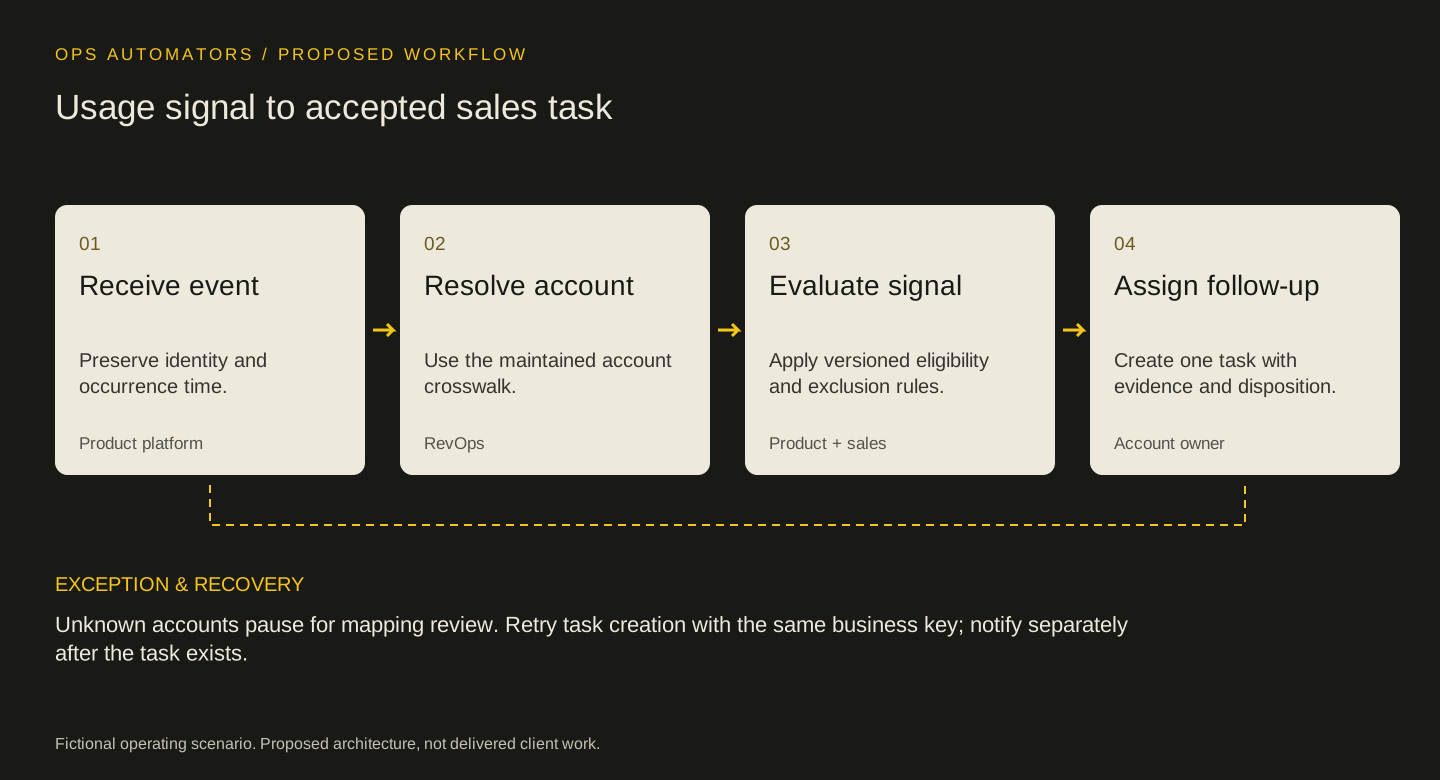
Proposed workflow
Usage signal to accepted sales task
Receive event
Preserve identity and occurrence time.
Product platformResolve account
Use the maintained account crosswalk.
RevOpsEvaluate signal
Apply versioned eligibility and exclusion rules.
Product + salesAssign follow-up
Create one task with evidence and disposition.
Account owner
Unknown accounts pause for mapping review. Retry task creation with the same business key; notify separately after the task exists.
Define a signal someone can explain
For this example, a rule might require an account to complete a chosen activation action and have no open follow-up task for that signal. The action, observation window and exclusions are assumptions to agree with product and sales before rollout.
Store signal_rule_version alongside the account, qualifying events and evaluation time. A rep should be able to open the task and see the evidence. Use a stable account-and-signal key to prevent a replay from creating another task.
Check current account ownership before assignment. Customer accounts follow the agreed customer-success path; prospects follow sales coverage. An alert is complete only when the task has an owner and a next action.
Run it beside the existing process first
In a shadow run, RevOps compares proposed tasks with a manually reviewed sample. Include employee accounts, shared domains, existing opportunities and delayed event batches. Product owns event meaning; RevOps owns the crosswalk and rule; sales owns disposition.
If the CRM is unavailable, retain the pending task request and retry with the same key. A failed notification should not erase the CRM task or cause another opportunity. Review unassigned tasks separately from delivery errors.
Measure the handoff before claiming a sales effect
Start with mapped-signal coverage, duplicate task count and time from an eligible signal to accepted ownership. Track disposition reasons so irrelevant alerts become rule changes rather than a larger notification stream.
A before-and-after conversion comparison needs consistent qualification rules, cohort windows and deal maturity. This example has none of that operating data, so it makes no sales-cycle or payback claim.
Keep this part
Signal acceptance checklist
An alert earns its place when the recipient can see the account, the evidence and the next action.
| Fixture | Expected decision | Evidence to retain |
|---|---|---|
| Known prospect, qualifying action | Create one sales task | Account ID, qualifying event IDs, rule version |
| Existing open signal task | Update context without a second task | Existing task ID |
| Paying customer | Use customer-success policy | Billing status timestamp and account owner |
| Unknown product account | Hold for identity review | Candidate mappings and source event |
| Old event replayed today | Evaluate using event time | Occurred-at and received-at |
Use the example to agree the rules, then fill in the blank sheet with your own records and owners. Downloads are free; no email required.
Evidence & limits
How to evaluate the proposal
Compare eligible signals with accepted tasks for a defined weekly cohort. Use task_created_at and owner_accepted_at for handoff latency. Keep qualification changes visible; do not attribute sales-cycle changes to routing alone.
- The qualification rule and observation window are example assumptions.
- Event availability, identity quality and sales capacity determine feasibility.
- A simple CRM task rule may be sufficient when the account mapping and event source are already reliable.
Sources & implementation context
- HubSpot owner assignment documentation
Owner assignment has product and synchronization constraints; verify them for the chosen CRM.
The design decisions and worksheets are original worked-example material. Vendor documentation supports specific platform behavior, not a claim that this implementation has been delivered.
How this page was prepared
AI assisted the research, drafting and conceptual artwork, helping compare source material and turn the workflow into a reusable worksheet. The scenario is fictional and the design is a proposal. The stated sources and limitations define the evidence available. No independent expert review or client result is implied.
About the team commissioning this collectionContinue with the useful detail
Where this connects.


Your next step
Are product signals becoming unattended alerts?
Bring one event payload and the task your sales team wishes it received. That's enough to start defining the handoff.