
From scattered account notes to a five-minute call brief
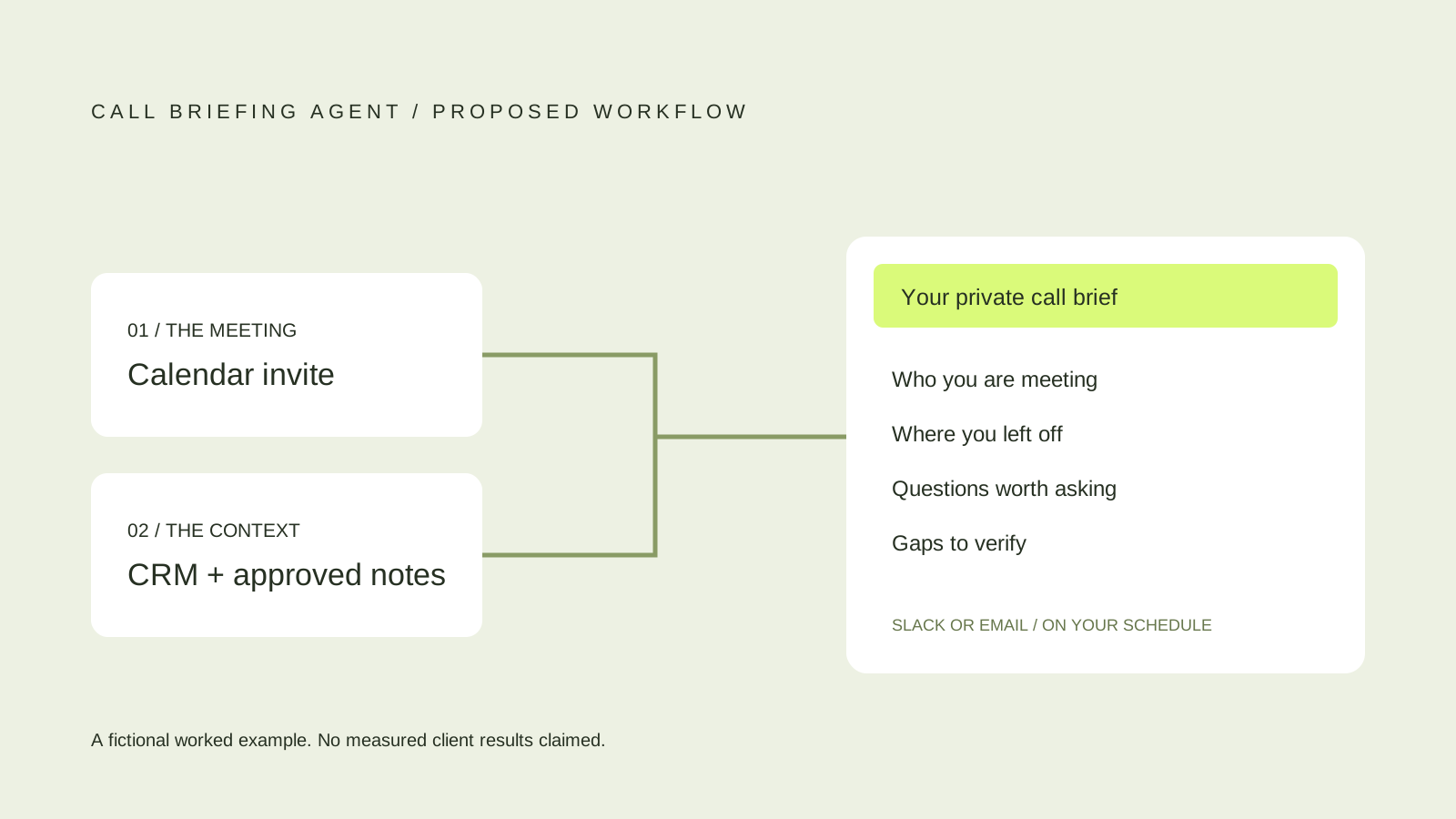
The meeting is on the calendar. The relationship history is spread across account records and old notes. This worked example brings that context into one brief, so the rep can spend their preparation time thinking about the conversation.
Worked example based on a fictional operating scenario. This is a proposed design, not a delivered client project. No measured time savings or sales outcomes are claimed.
- The problem
- A rep has to piece together the account history before each call and can miss an earlier commitment.
- The approach
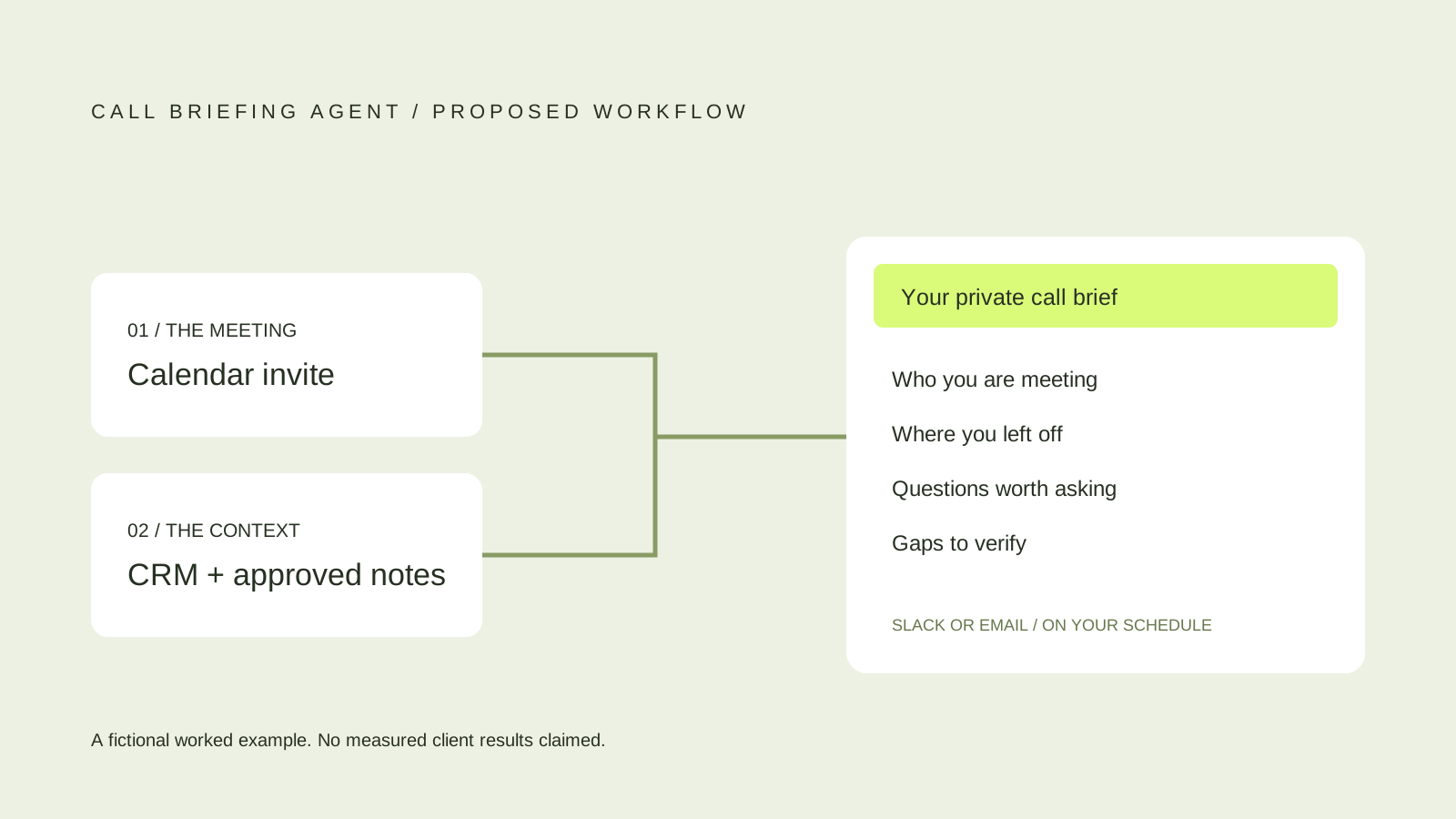
- Use the calendar event to retrieve approved CRM context, prepare a sourced brief, and deliver it privately before the call.
- Intended outcome
- Give the rep a useful starting point for preparation, with missing information visible.
Example system roles Proposed: one calendar + one CRM + approved meeting notes → private Slack message or email.
The ten minutes before the call
In this fictional scenario, a rep is about to meet Alex Morgan, the operations lead at Northstar. The invite has a name and an email address. The CRM has the opportunity. A previous note contains a promise to bring an example of a sales-to-delivery handoff.
If the rep reads only the invite, that promise is easy to miss. A useful brief surfaces it beside the meeting purpose and the questions still unanswered.
Agree on what belongs in the brief
Start with the meeting purpose, attendee roles, account context, earlier commitments, and suggested questions. Keep the brief short enough to read in about five minutes. That is a design target, not a measured reading-time result.
Separate facts from suggestions. A CRM note can establish that budget was discussed; the model should not turn an empty budget field into a purchasing estimate. Include source references and retrieval times so the rep can check a detail.
Proposed workflow
From meeting invite to a prepared conversation
Identify the meeting
Check event status, timing, and intended recipient.
Calendar workflowResolve the account
Match attendees to approved CRM records; flag ambiguity.
Matching rulesPrepare and check
Summarize notes, reference sources, and expose missing context.
Briefing agentDeliver privately
Recheck the event and send once to the mapped destination.
Delivery workflow
If the meeting is canceled, suppress the brief. If a match is uncertain or a source fails, flag the gap. Retry transient delivery failures with a stable delivery key and notify the workflow owner when recovery fails.
Match carefully before collecting context
Match the attendee email to an approved CRM contact, then follow the account relationship. A shared domain alone is not enough to select a person or opportunity. If there are several possible matches, flag the ambiguity and use only the available calendar context.
Gather only the records the recipient is allowed to access. Begin with existing CRM notes. Additional email history or public company research needs a defined source, access method, and freshness rule before it enters the build.
Deliver once, to the right person
For this example, delivery is scheduled 30 minutes before the call. That timing is an assumption to test with the team. Map the organizer to their private destination; external guests must not receive internal account notes.
Check the event again before sending. Cancellations suppress delivery, reschedules update the pending job, and retries use an event-and-recipient delivery key to avoid duplicate briefs. If a source is unavailable, identify the gap instead of silently presenting the summary as complete.
Pilot the brief before expanding it
Ask a small group of reps to evaluate briefs across comparable calls. Record preparation time, corrections, missing context, and whether the questions were useful. Include the time spent reviewing and fixing the brief.
If the existing CRM or meeting tool already supplies the needed context, configuration may be enough. A custom agent earns its place when useful information crosses systems and the delivery rules need to match the team's process.
Keep this part
Call briefing pilot worksheet
Test the account match, a missed commitment, and a rescheduled meeting before expanding the brief.
| Check | Scenario to try | Acceptance question |
|---|---|---|
| Identity | Two CRM contacts match an attendee | Does the brief flag uncertainty rather than use the wrong account? |
| Context | A previous note contains a promise | Is the commitment visible with its source? |
| Calendar | Reschedule or cancel before delivery | Is the old scheduled message suppressed? |
| Privacy | An external guest shares the invite | Does only the mapped team member receive the brief? |
| Recovery | Delivery retries after a timeout | Does the recipient receive only one brief? |
| Usefulness | A rep reviews a normal sales call | Are corrections and actual preparation time recorded? |
Use the example to agree the rules, then fill in the blank sheet with your own records and owners. Downloads are free; no email required.
Evidence & limits
How to evaluate the proposal
During a pilot, compare preparation minutes for similar calls before and after adoption, including review time. Record eligible meetings, on-time deliveries, factual corrections, missing context, and rep usefulness ratings over a stated period. Treat sales outcomes as a separate question; this example does not establish improved conversion.
- All people, company details, and meeting notes in the sample are fictional.
- A brief can only be as current and complete as its approved sources.
- Calendar, CRM, delivery access, operating costs, and ownership need confirmation before implementation.
The design decisions and worksheets are original worked-example material. Vendor documentation supports specific platform behavior, not a claim that this implementation has been delivered.
How this page was prepared
AI assisted the research, drafting and conceptual artwork, helping compare source material and turn the workflow into a reusable worksheet. The scenario is fictional and the design is a proposal. The stated sources and limitations define the evidence available. No independent expert review or client result is implied.
About the team commissioning this collectionContinue with the useful detail
Where this connects.

Your next step
What context would help your team before a call?
Bring an example meeting and the systems that hold its context. We can scope a first brief and a pilot to evaluate it.