
Match a Stripe payout without losing the fees and refunds
A payout is a batch of settled activity. This worked example proposes a reconciliation queue that connects the bank deposit to the batch and gives finance a clear explanation for any difference.
Worked example. This is a proposed solution for a fictional operating scenario, not a client engagement. No measured results are claimed.

- The problem
- Finance matches a net bank deposit against gross sales and spends time searching for missing amounts.
- The approach
- Reconcile an automatic payout to its itemized balance transactions, then match the bank deposit and review exceptions.
- Intended outcome
- The intended benefit is a traceable settlement check. This example doesn't establish accounting treatment or measured close-time savings.
Example system roles Stripe reports · bank feed · accounting ledger · reconciliation queue
Choose the report that fits the payout
This example starts with a business using Stripe automatic payouts in one currency. Finance checks each deposit manually. The payout reconciliation report groups activity by the automatic payout it settles, giving the match a more useful starting point than a daily sales total.
Manual and instant payouts have different reconciliation constraints. Stripe documents that its automatic-payout report doesn't cover every payout mode in the same way. Confirm the actual account setup before building the match.
An invoice, a payment and a payout are different records. A paid invoice may not have settled into the bank yet; treating that timing difference as missing revenue creates unnecessary investigation.
Keep the transaction detail
Import payout ID, balance transaction ID, reporting category, currency and signed net amount. Retain gross and fee fields where supplied. Preserve source precision and documented units rather than converting every currency through a two-decimal assumption.
Match by payout reference and currency before using amount or date. Amount-only matching can pair the wrong deposit when two payouts happen to be equal. A missing bank reference goes to a candidate-match review, not an automatic match.
Store import watermark and report availability. A report that isn't ready yet should remain pending rather than be treated as a zero-value batch.
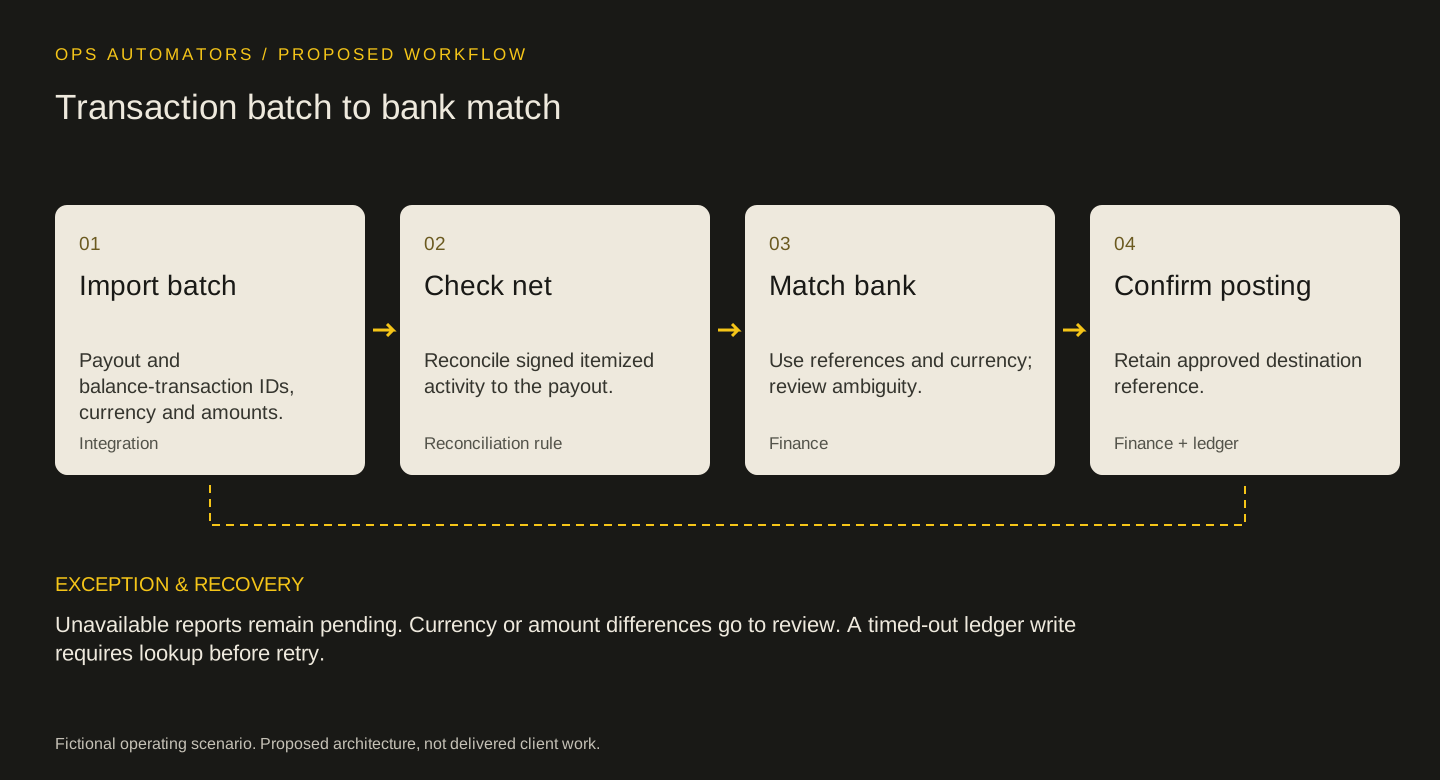
Proposed workflow
Transaction batch to bank match
Import batch
Payout and balance-transaction IDs, currency and amounts.
IntegrationCheck net
Reconcile signed itemized activity to the payout.
Reconciliation ruleMatch bank
Use references and currency; review ambiguity.
FinanceConfirm posting
Retain approved destination reference.
Finance + ledger
Unavailable reports remain pending. Currency or amount differences go to review. A timed-out ledger write requires lookup before retry.
A fictional batch that balances
For illustration, suppose one USD batch contains 1,000.00 in gross payments, 30.00 in fees and a 100.00 refund, with no other adjustments. Its expected net is 870.00 USD. The worksheet makes that arithmetic explicit; it is not a real payout or an assumed fee schedule.
In a real report, categories and signed amounts should come from the itemized data. Disputes, reserves, foreign exchange and other adjustments can affect the result. Don't force a difference into fees merely to balance the worksheet.
A match can be proposed without posting a journal
The workflow proposes the batch-to-bank match and records the difference. Finance reviews ambiguous matches and determines the accounting treatment. Writing a ledger entry is a separate authorized step with its own reference and duplicate protection.
If the accounting API times out after accepting a write, look up the external reference before retrying. Keep the reconciliation record pending posting until the destination confirms it. A successful match and a failed ledger write need different statuses.
Reconcile the unsettled balance separately from settled payouts. Otherwise, a transaction that belongs in the next batch may be mistaken for an error in the current one.
Start with a difficult but bounded period
Pilot one currency and one payout mode. Include a refund, a delayed bank deposit and a failed payout. Compare the workflow's decisions with finance's reviewed result.
Track unresolved differences and time to explain them, including manual review. A faster import is useful only if the month-end totals still reconcile.
Keep this part
Fictional USD settlement worksheet
Match the settlement batch before explaining the bank deposit.
| Item | Signed amount | Interpretation |
|---|---|---|
| Payments | 1,000.00 USD | Teaching input |
| Fees | −30.00 USD | Teaching input, not a pricing rate |
| Refund | −100.00 USD | Teaching input |
| Expected payout | 870.00 USD | 1,000 − 30 − 100 |
| Example bank deposit | 870.00 USD | Teaching input |
| Difference | 0.00 USD | Expected payout minus deposit |
Use the example to agree the rules, then fill in the blank sheet with your own records and owners. Downloads are free; no email required.
Evidence & limits
How to evaluate the proposal
Measure exception count and handling minutes per payout for a dated, comparable set of settlement batches. Include report delays and review time. Do not call estimated staff capacity an accounting cost reduction.
- The arithmetic uses fictional inputs and omits other adjustment categories.
- Manual payouts, instant payouts, multiple currencies and ledger policies need a separate design.
Sources & implementation context
- Stripe: payout reconciliation report
Primary source for automatic-payout grouping, report availability and supported payout modes.
The design decisions and worksheets are original worked-example material. Vendor documentation supports specific platform behavior, not a claim that this implementation has been delivered.
How this page was prepared
AI assisted the research, drafting and conceptual artwork, helping compare source material and turn the workflow into a reusable worksheet. The scenario is fictional and the design is a proposal. The stated sources and limitations define the evidence available. No independent expert review or client result is implied.
About the team commissioning this collectionContinue with the useful detail
Where this connects.


Your next step
Which payout takes finance the longest to explain?
Bring a redacted payout report and the corresponding bank line. We can define the matching rules and exception queue.