
Three revenue numbers, three different questions
A signed agreement, an issued invoice and a received payment are different events. This worked example proposes a reporting model that keeps those differences visible and lets finance trace a number back to its source.
Worked example. This is a proposed solution for a fictional operating scenario, not a client engagement. No measured results are claimed.

- The problem
- Leadership receives conflicting figures because reports combine different events, dates and customer identifiers.
- The approach
- Keep bookings, invoice activity and cash receipts in separate datasets joined through an approved customer and contract crosswalk.
- Intended outcome
- The intended benefit is a report whose differences can be explained. This isn't an accounting policy or a verified reporting engagement.
Example system roles CRM opportunities · invoice ledger · payment records · reporting store
Agree the question before building the chart
Assume a SaaS business has a CRM bookings report, a billing export and a payments report. A weekly meeting calls each of them revenue. They disagree because a contract can be signed this month, invoiced next month and paid later.
Finance defines the reporting terms. In this example, bookings represent accepted contractual commitments under the business's policy; billings represent issued invoice activity; cash receipts represent recorded payments. Recognized revenue requires a separate accounting policy and is outside this design.
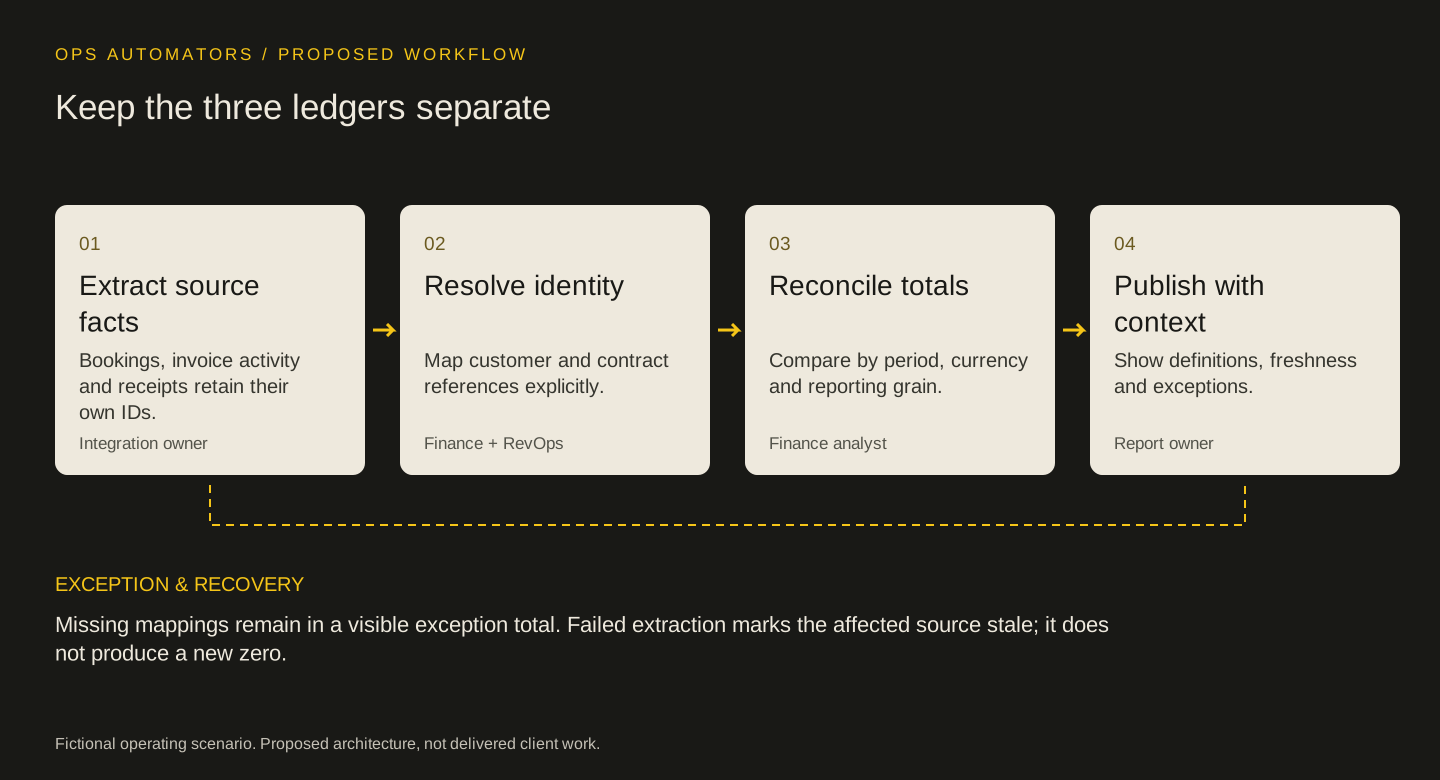
Proposed workflow
Keep the three ledgers separate
Extract source facts
Bookings, invoice activity and receipts retain their own IDs.
Integration ownerResolve identity
Map customer and contract references explicitly.
Finance + RevOpsReconcile totals
Compare by period, currency and reporting grain.
Finance analystPublish with context
Show definitions, freshness and exceptions.
Report owner
Missing mappings remain in a visible exception total. Failed extraction marks the affected source stale; it does not produce a new zero.
A small fictional example shows the difference
Suppose a fictional contract is signed for 12,000 USD, an initial invoice is issued for 3,000 USD and the customer pays 2,000 USD against that invoice. Those figures answer different questions. The remaining invoice balance is 1,000 USD before any adjustments; the unbilled contract portion is not overdue cash.
These are teaching inputs, not Ops Automators results. They don't determine revenue recognition, tax or the treatment of amendments. The finance owner must specify those policies.
A credit, refund or cancellation should retain its source event and link to the affected record. Rewriting a historical total without retaining the adjustment makes prior reports impossible to explain.
Freshness belongs beside the number
Store source_updated_at, ingested_at and the last successful extraction watermark. A report should say when each source was current. If billing extraction fails, show the stale state instead of presenting yesterday's value as today's reconciliation.
Schedule a reconciliation that compares source control totals to the reporting store by period and currency. Investigate unmatched records, changed statuses and adjustments separately. The report owner approves corrections; the integration owner repairs extraction errors.
Pilot with one period that includes a partial payment, a credit and an amended agreement. Finance should be able to trace each figure to the underlying records and reproduce the calculation.
Use the report to explain a discrepancy before adding more charts. If the organization hasn't agreed what a booking means, a new dashboard will simply repeat the disagreement more neatly.
Keep this part
Fictional reconciliation example
Preserve the event, the date and the definition behind each number.
| Measure | Teaching input | What it answers |
|---|---|---|
| Contract commitment | 12,000 USD | What was agreed under the bookings policy? |
| Issued invoice | 3,000 USD | What has been billed? |
| Applied payment | 2,000 USD | What payment has been recorded? |
| Unpaid invoice balance | 3,000 − 2,000 = 1,000 USD | What remains on this invoice before adjustments? |
| Unbilled contract portion | 12,000 − 3,000 = 9,000 USD | What part of this example contract is not yet invoiced? |
Use the example to agree the rules, then fill in the blank sheet with your own records and owners. Downloads are free; no email required.
Evidence & limits
How to evaluate the proposal
Validate report completeness against dated source totals and document every definition. Track unresolved reconciliation differences and time to explain them. Do not describe improved visibility as attributable revenue.
- All amounts in the table are fictional teaching inputs in one currency.
- Revenue recognition and accounting policy require the finance team's own determination.
- A reporting store adds extraction and reconciliation ownership. A reviewed export may be enough for an infrequent report.
Sources & implementation context
- Stripe: payout reconciliation report
Explains settlement batches and balances; a payout is not the same as a sale or an invoice.
The design decisions and worksheets are original worked-example material. Vendor documentation supports specific platform behavior, not a claim that this implementation has been delivered.
How this page was prepared
AI assisted the research, drafting and conceptual artwork, helping compare source material and turn the workflow into a reusable worksheet. The scenario is fictional and the design is a proposal. The stated sources and limitations define the evidence available. No independent expert review or client result is implied.
About the team commissioning this collectionContinue with the useful detail
Where this connects.


Your next step
Which number causes the argument in your revenue meeting?
Bring the definitions used in the meeting and a redacted mismatch. We can trace the records behind each figure.