
Candidate search: understand every match on the shortlist
Recruiters lose time translating a hiring brief into searches across disconnected candidate sources. A ranked list is only useful when its reasoning is inspectable.
A fictional operating scenario and proposed solution. No named organization or measured customer result is represented.

- The problem
- Recruiters lose time translating a hiring brief into searches across disconnected candidate sources. A ranked list is only useful when its reasoning is inspectable.
- The approach
- Describe the skills you need → Compare matches and missing criteria → Save candidates to a shortlist.
- Intended outcome
- A recruiter can inspect matched and missing criteria before deciding which candidates belong on the shortlist.
Example system roles Custom application · connected business records · explicit rules · human review
Interactive sample
Fictional data · changes reset when you leave
A shortlist you can explain
Try changing the brief to “SQL, dbt and Snowflake.” This sample matches skill keywords, including skills mentioned in negative phrases; it does not interpret intent.
Supported skills: python, sql, aws, dbt, snowflake, typescript. Equal matches are ordered by candidate ID.
7 years of sample experience · 100% of requested skills
Matched: python, sql, aws
Missing: None
8 years of sample experience · 67% of requested skills
Matched: python, aws
Missing: sql
4 years of sample experience · 67% of requested skills
Matched: python, sql
Missing: aws
5 years of sample experience · 33% of requested skills
Matched: sql
Missing: python, aws
This sample searches a small fictional dataset using keyword matching. It does not call an AI model, search external profiles, or write to a CRM.
Make the brief explicit
A recruiter receives a request for a technical role. The brief mixes required skills, preferences, and context about the team. Searching every phrase as a keyword can exclude useful candidates or promote weak matches.
The proposed workflow first turns the brief into criteria for the recruiter to review. Required skills and preferences remain separate. Unknown requirements become questions rather than invented candidate attributes.
Explain the ranking
Each result shows the criteria it satisfies and the evidence that is missing. A score supports comparison; it does not establish suitability or replace a conversation with the candidate.
The interactive sample below demonstrates a deliberately smaller step: keyword matching across fictional skill records. It does not interpret negation, call an AI model, or search external profiles.
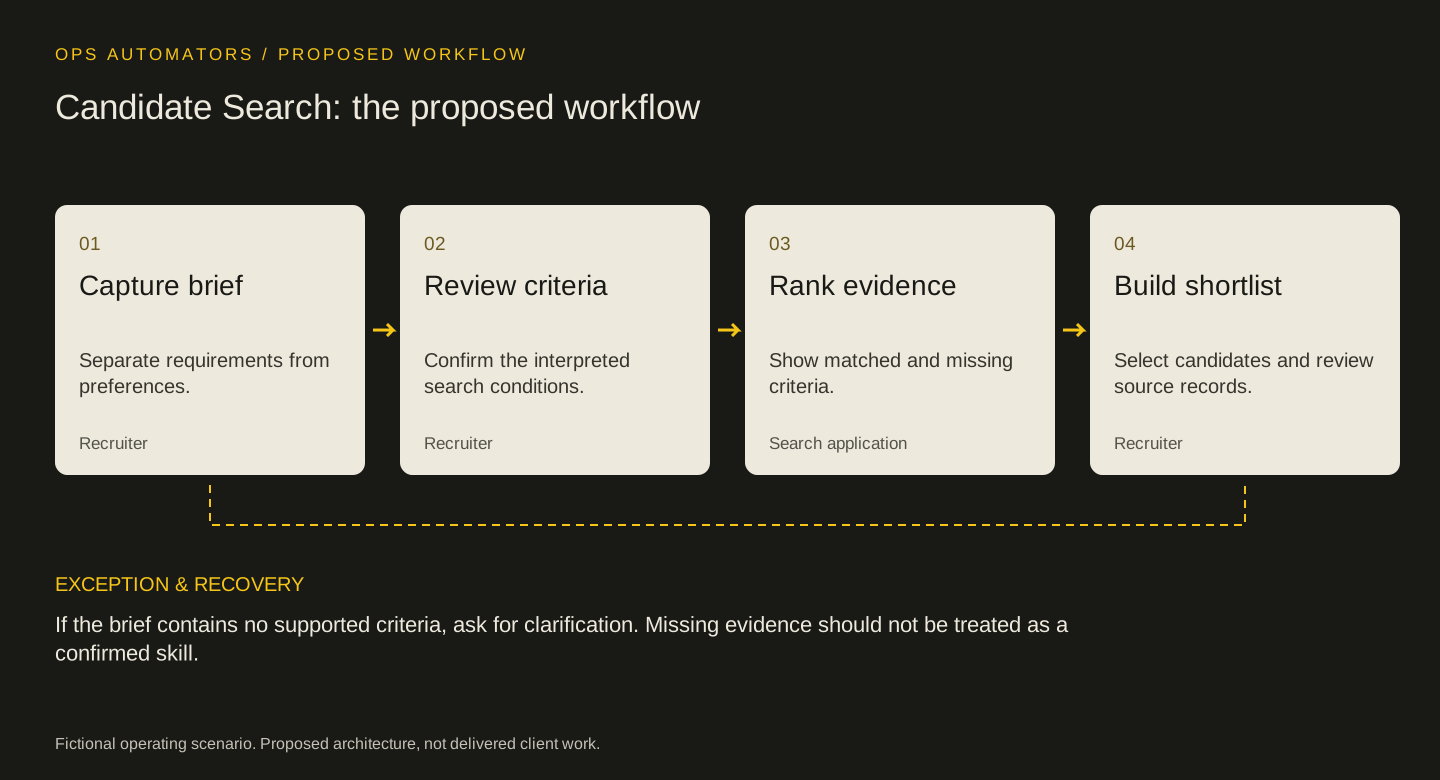
Proposed workflow
Candidate Search: the proposed workflow
Capture brief
Separate requirements from preferences.
RecruiterReview criteria
Confirm the interpreted search conditions.
RecruiterRank evidence
Show matched and missing criteria.
Search applicationBuild shortlist
Select candidates and review source records.
Recruiter
If the brief contains no supported criteria, ask for clarification. Missing evidence should not be treated as a confirmed skill.
Keep selection with the recruiter
A shortlist is a reviewed output. The recruiter can remove a candidate, revise the criteria, and compare the new results without treating the previous order as a final decision.
For a connected implementation, confirm source freshness and permission to use each data source. Test duplicate records and unavailable sources before enabling any writeback.
Keep this part
Candidate Search decision sheet
A shortlist is more useful when the recruiter can see both the reason for a match and the evidence still missing.
| Situation to test | Expected behavior | Review and ownership |
|---|---|---|
| Required skill | Evidence in the source record | Recruiter confirms the requirement |
| Missing criterion | An explicit gap beside the result | Recruiter decides whether to investigate |
| Duplicate profile | One reconciled candidate record | Owner verifies identity before writeback |
Use the example to agree the rules, then fill in the blank sheet with your own records and owners. Downloads are free; no email required.
Evidence & limits
How to evaluate the proposal
Evaluate relevance with recruiter-reviewed sample briefs, including weak matches and missing data. Measure shortlist preparation time separately from hiring outcomes; no improvement is claimed here.
- This sample searches a small fictional dataset using keyword matching. It does not call an AI model, search external profiles, or write to a CRM.
- Implementation depends on source data, access rules, and policies agreed with the responsible team.
The design decisions and worksheets are original worked-example material. Vendor documentation supports specific platform behavior, not a claim that this implementation has been delivered.
How this page was prepared
AI assisted the research, drafting and conceptual artwork, helping compare source material and turn the workflow into a reusable worksheet. The scenario is fictional and the design is a proposal. The stated sources and limitations define the evidence available. No independent expert review or client result is implied.
About the team commissioning this collectionContinue with the useful detail
Where this connects.


Your next step
Can a recruiter explain why a candidate ranked third?
Bring a live brief and a shortlist you'd defend. We can define the match criteria and where a reason has to stay visible.