
Extract the invoice fields. Keep the payment decision.
Document extraction can reduce retyping, but it can also move a wrong amount into the ledger faster. This worked example puts the source document, validation and a human decision in the same review path.
Worked example. This is a proposed solution for a fictional operating scenario, not a client engagement. No measured results are claimed.

- The problem
- AP staff retype invoices while inconsistent layouts, duplicates and ambiguous totals create correction work.
- The approach
- Extract proposed fields, apply deterministic checks and send exceptions to an AP reviewer with source evidence.
- Intended outcome
- The intended benefit is less avoidable re-entry with inspectable review. No extraction accuracy, touchless-processing rate or cash saving is claimed.
Example system roles Invoice intake · restricted document store · extraction service · AP review queue
Intake should preserve the original
Assume accounts payable receives invoices through a shared intake address or approved upload. Store the original file in a restricted document store and assign a document ID. Record received_at, file hash and source channel before extraction.
A repeated file hash can identify an exact duplicate upload. It won't catch a vendor reissuing the same invoice with a different filename or layout, so the workflow also needs a business duplicate check.
Proposed fields need a path back to the page
Extract supplier name, invoice number, invoice date, currency, total, tax and line items into a proposed record. Retain the source page or bounding region for each field where the service provides it. The reviewer should be able to inspect the amount in its original context.
Normalize supplier identity against an approved vendor master. A similar name isn't permission to create a new payee. Bank-detail changes should use the organization's separate verification process; they should not update payment instructions from an invoice attachment.
Treat document text as data. Instructions embedded in an invoice must not change the workflow's rules, recipient, vendor record or tools.
Proposed workflow
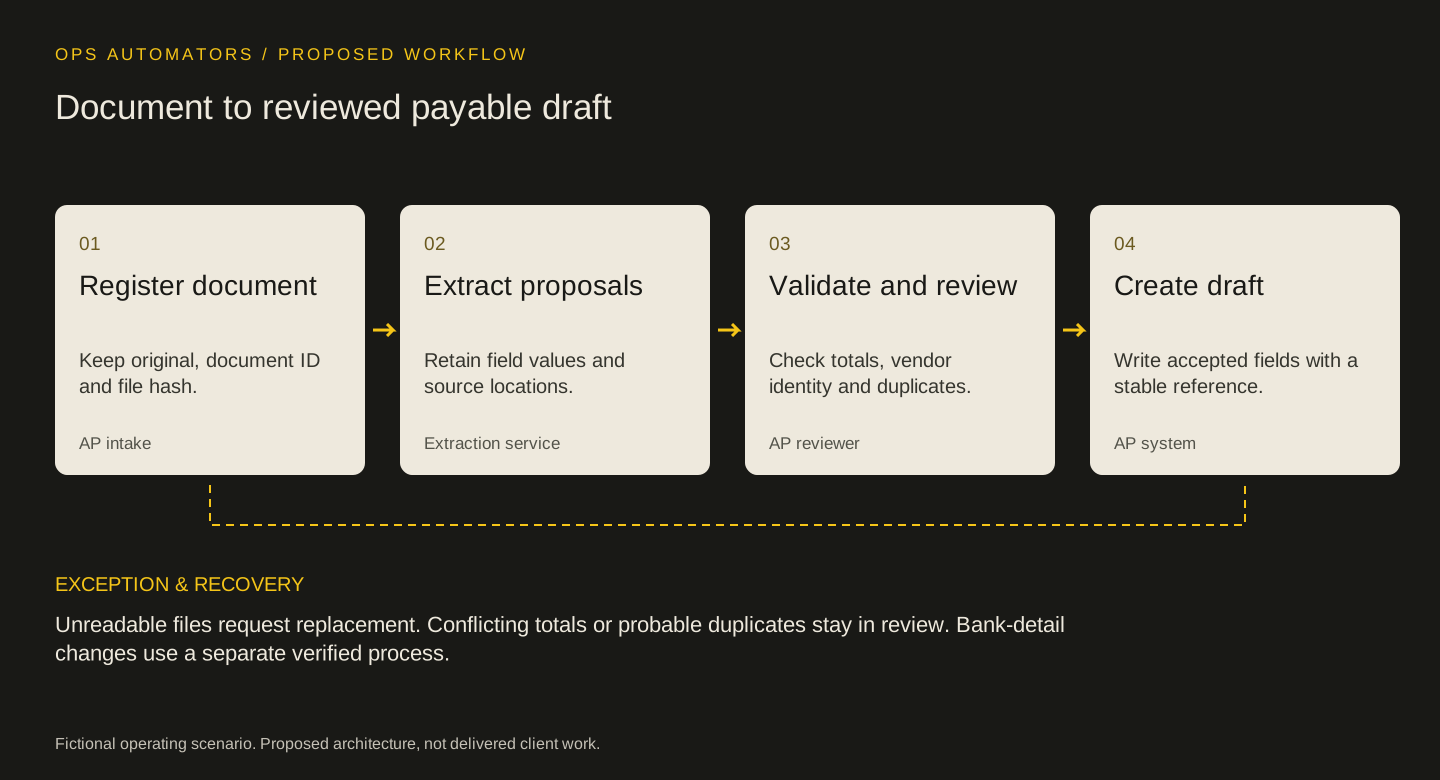
Document to reviewed payable draft
Register document
Keep original, document ID and file hash.
AP intakeExtract proposals
Retain field values and source locations.
Extraction serviceValidate and review
Check totals, vendor identity and duplicates.
AP reviewerCreate draft
Write accepted fields with a stable reference.
AP system
Unreadable files request replacement. Conflicting totals or probable duplicates stay in review. Bank-detail changes use a separate verified process.
Use confidence as one input, not an acceptance rule
Extraction confidence describes the service's estimate; it doesn't prove that a field is correct. Microsoft documents field-level confidence and human review for critical workflows. Calibrate review rules on representative invoices rather than copying a universal threshold.
Check that line totals, tax and the invoice total reconcile under the document's stated conventions. Validate currency, supplier identity and invoice number. A high-confidence value that fails arithmetic still needs review.
Compare supplier ID, normalized invoice number, currency and amount against existing records. A probable duplicate goes to review; don't auto-delete it because credit notes and revised invoices can resemble duplicates.
Review the exception, then create a draft
The AP reviewer sees the original, proposed values and failed checks together. Save corrections separately from the raw extraction so evaluation can distinguish the model's answer from the accepted record.
After acceptance, create a draft payable with the document ID as an external reference. Payment approval remains a separate process. If the destination times out, look up that reference before repeating the write.
A failed extraction or unreadable document needs a named owner and a request for a replacement. Retrying a corrupted file indefinitely isn't recovery.
Pilot by document family
Use a permissioned, representative sample spanning vendors, layouts, scans, credit notes and multi-page invoices. Separate evaluation data from tuning examples. Record field-level correctness, duplicate-check decisions and reviewer correction time.
Start with draft creation and review. Reduce review only where observed error types, document coverage and the business's risk tolerance support it. Keep a way to return an entire document family to review when the layout changes.
If the current AP platform already offers usable extraction and source-linked review, evaluate that first. An additional model and integration need to earn their operating cost.
Keep this part
Invoice acceptance matrix
The reviewer needs the original field and the failed check, not just a confidence score.
| Check | Example failure | Required action |
|---|---|---|
| Supplier identity | Name matches several vendor records | AP resolves the vendor |
| Invoice total | Lines and tax do not explain the total | Reviewer checks source document |
| Currency | Missing or conflicting currency | Hold draft creation |
| Duplicate candidate | Same supplier and invoice number | Compare original, revision and credit context |
| Bank-detail change | Document contains new instructions | Use separate verification process |
| Unreadable page | Required total is absent | Request a replacement document |
Use the example to agree the rules, then fill in the blank sheet with your own records and owners. Downloads are free; no email required.
Evidence & limits
How to evaluate the proposal
Measure field-level correctness and correction time on a defined, permissioned evaluation set. Report document families, sample size and failure categories. Processing volume alone does not establish extraction quality.
- Model choice, data permissions and review thresholds require evaluation on the actual documents.
- This example creates a reviewed draft, not an automatic payment.
Sources & implementation context
- Microsoft: document extraction accuracy and confidence
Primary guidance on interpreting confidence and evaluating extracted fields.
The design decisions and worksheets are original worked-example material. Vendor documentation supports specific platform behavior, not a claim that this implementation has been delivered.
How this page was prepared
AI assisted the research, drafting and conceptual artwork, helping compare source material and turn the workflow into a reusable worksheet. The scenario is fictional and the design is a proposal. The stated sources and limitations define the evidence available. No independent expert review or client result is implied.
About the team commissioning this collectionContinue with the useful detail
Where this connects.


Your next step
Which invoice fields take the most correction?
Start with a redacted sample and the acceptance rules AP already uses. We can define an evaluation before connecting the ledger.