
Route the lead without replacing the account owner
A new form submission can belong to a customer who already has an account team. This worked example puts identity and ownership ahead of distribution, then makes exceptions visible to RevOps.
Worked example. This is a proposed solution for a fictional operating scenario, not a client engagement. No measured results are claimed.

- The problem
- A distribution rule assigns an existing account's lead to a different rep, creating competing outreach.
- The approach
- Resolve identity, preserve valid account ownership and distribute only genuinely unowned prospects.
- Intended outcome
- The intended benefit is fewer conflicting assignments and an accountable fallback queue. No response-time or conversion result is claimed.
Example system roles Website form · CRM accounts and contacts · assignment queue
The collision is between two correct-looking rules
A form submission arrives from someone at an existing customer. The CRM has an account owner, but the inbound workflow sends the lead through round robin. Each rule appears reasonable in isolation; together they put two salespeople on the same conversation. That collision is the starting point for this fictional scenario.
Start with a policy decision: which owner takes precedence? In this example, an explicitly matched customer account takes precedence over territory distribution. RevOps and sales leadership must agree that policy before a builder encodes it.
Write a decision record for every assignment
Persist lead_id, matched_account_id, prior_owner_id, selected_owner_id, rule_version and decision_reason. Keep occurred_at separate from processed_at. This creates a way to answer why a lead went to a rep without reconstructing last month's workflow configuration.
Match by maintained account identifiers where available. Normalize a domain for comparison, but don't treat a shared email domain or a subsidiary name as conclusive identity. Multiple plausible matches go to a review queue.
Read current ownership just before writing the assignment. If another process changed the record after evaluation, reevaluate it instead of overwriting the newer decision.
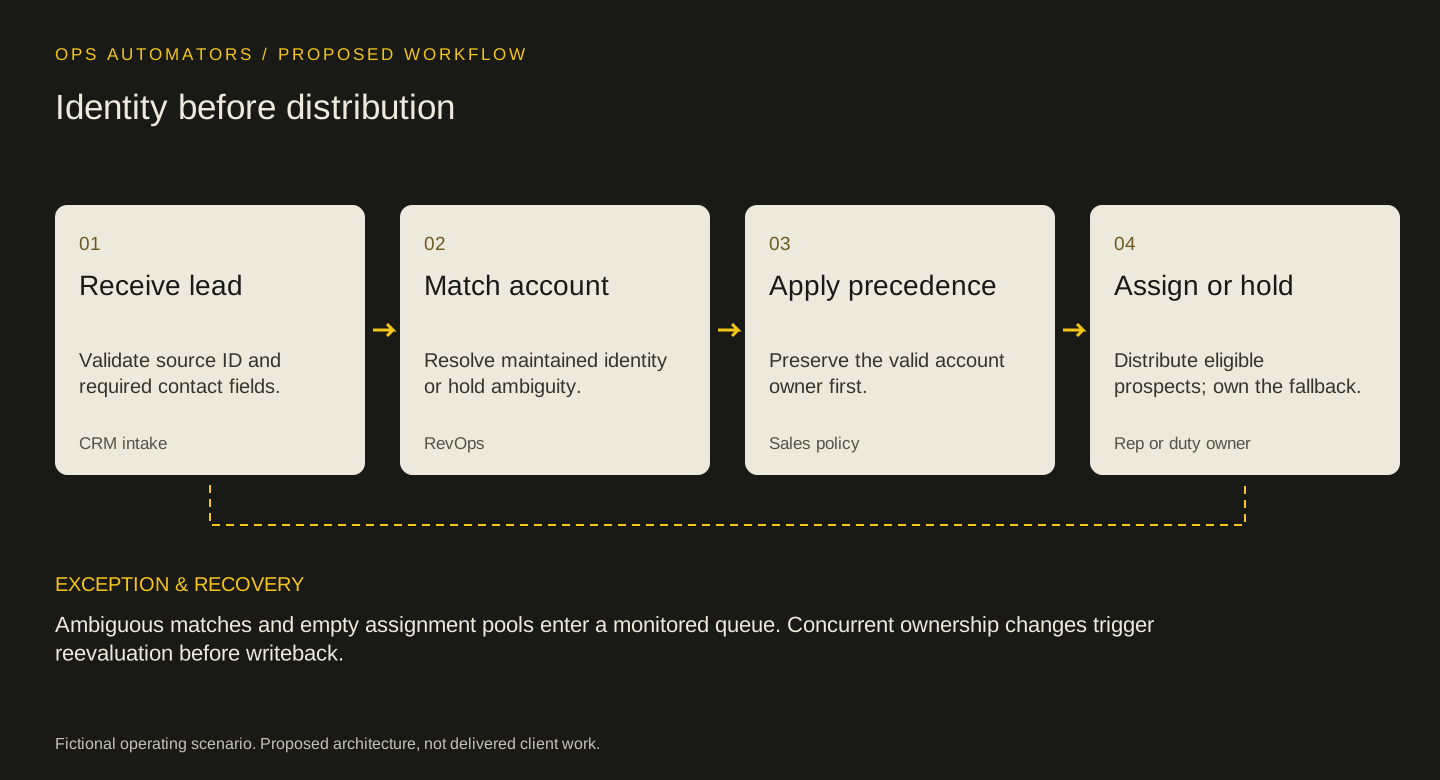
Proposed workflow
Identity before distribution
Receive lead
Validate source ID and required contact fields.
CRM intakeMatch account
Resolve maintained identity or hold ambiguity.
RevOpsApply precedence
Preserve the valid account owner first.
Sales policyAssign or hold
Distribute eligible prospects; own the fallback.
Rep or duty owner
Ambiguous matches and empty assignment pools enter a monitored queue. Concurrent ownership changes trigger reevaluation before writeback.
Round robin is the final branch
Only an unmatched, eligible prospect enters the distribution pool. The pool needs an active roster and a documented absence policy. If nobody is eligible, assign a monitored fallback queue with a named duty owner. A blank owner is not a routing strategy.
Use native CRM routing if it already supports the policy. HubSpot documents owner-sync interactions and subscription requirements for its rotation action. Confirm the selected product's behavior before adding a separate workflow that competes with it.
Deduplicate the business action using the lead and routing policy version. A repeat delivery should retrieve the assignment outcome; it should not rotate the same lead again.
Rehearse changes before turning off the old rule
Run proposed decisions without changing owners and compare them with a reviewed sample. Include customer submissions, a rep leaving the team, a subsidiary with a shared domain and a burst of simultaneous leads. Sales owns the coverage policy; RevOps maintains the roster and monitors conflicts.
At cutover, disable the old writer deliberately and keep its configuration export. Monitor assignment age and conflict volume. If a new rule fails, pause new assignments into the fallback queue rather than restoring stale owners across the CRM.
The service boundary
A native rule and a maintained roster may solve this without a custom integration. Custom work becomes useful when identity, ownership or coverage crosses systems. The deliverable should still be an understandable policy and an assignment record, not a rule only its author can debug.
Keep this part
Routing decision table
Write the owner-precedence table before editing the workflow.
| Condition | Decision | Reason to store |
|---|---|---|
| Matched customer; valid owner | Preserve account owner | Existing account coverage |
| Matched account; inactive owner | Hold for coverage review | Owner requires replacement |
| Several plausible accounts | Hold identity decision | Ambiguous match |
| Unmatched eligible prospect | Apply distribution policy | New prospect |
| No available rep | Assign duty queue | Coverage unavailable |
| Repeated event | Return previous decision | Already processed |
Use the example to agree the rules, then fill in the blank sheet with your own records and owners. Downloads are free; no email required.
Evidence & limits
How to evaluate the proposal
Define the inbound cohort and compare conflict rate, unassigned age and owner acceptance time. Inspect a sample of account matches separately from task speed. A routing change alone does not prove incremental sales.
- The ownership precedence is an example policy, not a universal CRM default.
- Licensing, synchronization rules and the active roster must be checked in the chosen system.
Sources & implementation context
- HubSpot: assign and rotate record owners
Documents owner overwrite, rotation and Salesforce synchronization considerations.
The design decisions and worksheets are original worked-example material. Vendor documentation supports specific platform behavior, not a claim that this implementation has been delivered.
How this page was prepared
AI assisted the research, drafting and conceptual artwork, helping compare source material and turn the workflow into a reusable worksheet. The scenario is fictional and the design is a proposal. The stated sources and limitations define the evidence available. No independent expert review or client result is implied.
About the team commissioning this collectionContinue with the useful detail
Where this connects.


Your next step
Which rule wins when two reps own the same account?
Bring your current routing rules and a few disputed assignments. We can turn the exceptions into an explicit coverage policy.