
Don't start onboarding with half a handoff
A deal closes and a project appears, but nobody knows what sales promised. This worked example proposes a readiness gate between the sale and the delivery team's commitments.
Worked example. This is a proposed solution for a fictional operating scenario, not a client engagement. No measured results are claimed.

- The problem
- Project creation hides missing scope, contacts and dependencies until the kickoff call.
- The approach
- Create an owned readiness record, validate the handoff, then provision the project once.
- Intended outcome
- The intended benefit is a clearer start and fewer avoidable handoff questions. Onboarding speed and retention have not been measured.
Example system roles CRM · contract store · project platform · customer communication
Closed-won opens a readiness record
The project exists. The delivery lead still has to ask what was sold. In this fictional services business, project creation runs as soon as a deal closes, before anyone has confirmed the customer contact, agreed scope or promised start date.
In the proposed design, closed-won creates an internal handoff record. Sales owns it until the minimum information is present. Delivery accepts the handoff before the customer receives a committed schedule.
Separate missing information from a real dependency
Required fields include contract version, service package, billing entity, primary customer contact, delivery owner and agreed outcome. Dependencies such as security review or customer-provided credentials need their own status and owner.
A missing field goes back to sales with a specific request. A legitimate dependency can remain open if delivery accepts it and records what it blocks. Treating both as a generic pending state makes it hard to decide whether work can begin.
Avoid copying access credentials into CRM notes or a kickoff brief. Reference the approved exchange method and track receipt without storing the secret in the handoff.
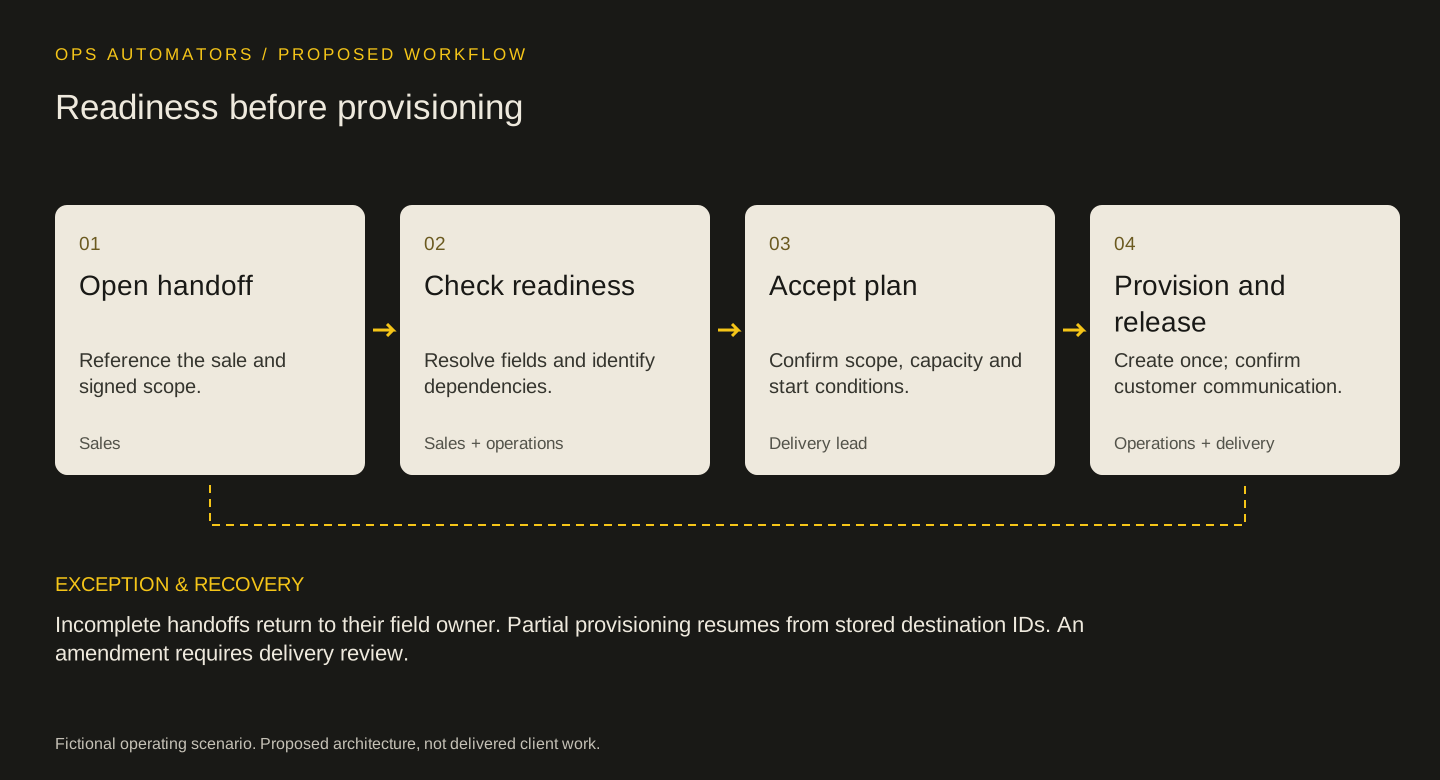
Proposed workflow
Readiness before provisioning
Open handoff
Reference the sale and signed scope.
SalesCheck readiness
Resolve fields and identify dependencies.
Sales + operationsAccept plan
Confirm scope, capacity and start conditions.
Delivery leadProvision and release
Create once; confirm customer communication.
Operations + delivery
Incomplete handoffs return to their field owner. Partial provisioning resumes from stored destination IDs. An amendment requires delivery review.
Provision with a restartable checklist
Once accepted, create the project, agreed task template and restricted document space. Store the destination IDs against the handoff. Use the opportunity and accepted contract version as the operation key so repeated events can reuse completed steps.
If the project succeeds and the folder step fails, keep the project ID and retry only the missing step. A single failed operation should not leave three projects and no usable folder.
Customer communication is a separate release step. The delivery owner confirms the contact, schedule and dependencies before sending. If a message fails, record its status and retry that delivery without rebuilding the project.
Scope changes go back through acceptance
An amendment after acceptance creates a handoff revision. Show the delivery lead which milestones, dependencies or dates changed. Don't replace the task template under active work just because a CRM field was edited.
Sales is responsible for the commercial context; delivery owns the implementation plan; operations owns provisioning failures. Each open exception needs one next-action owner, even when several teams participate.
Pilot a standard sale, a missing contact, a changed package and a customer whose security review delays kickoff. Compare the accepted handoff with what the delivery team actually needed.
Measure the time from closed-won to handoff acceptance and from acceptance to ready-to-start separately. The distinction reveals whether delay comes from sales information or delivery capacity. Faster email delivery won't fix either.
Keep this part
Minimum onboarding handoff record
A handoff is finished when the receiving team accepts it.
| Field | Why it exists | Who confirms it |
|---|---|---|
| Contract ID and version | Defines the accepted scope | Sales |
| Customer contact and role | Identifies the person who can unblock work | Sales |
| Agreed outcome | Gives delivery a success condition | Sales + delivery |
| Dependencies and owners | Explains what prevents a start | Delivery lead |
| Target start and capacity check | Avoids promising unavailable delivery | Delivery lead |
| Destination IDs and release status | Supports recovery without duplicate projects | Operations |
Use the example to agree the rules, then fill in the blank sheet with your own records and owners. Downloads are free; no email required.
Evidence & limits
How to evaluate the proposal
Record closed_won_at, handoff_accepted_at and ready_to_start_at for comparable packages. Include returned handoffs and reasons. Track clarification requests after acceptance; do not infer retention improvement from a shorter setup time.
- Package templates and readiness criteria need agreement between sales and delivery.
- The example doesn't provision customer access or send actual messages.
- Use native project templates if they already preserve accepted scope and support recovery; another system may add more maintenance than value.
Sources & implementation context
- Stripe: handling asynchronous events
An example of documented repeat-delivery behavior; apply the actual event provider's contract in a build.
The design decisions and worksheets are original worked-example material. Vendor documentation supports specific platform behavior, not a claim that this implementation has been delivered.
How this page was prepared
AI assisted the research, drafting and conceptual artwork, helping compare source material and turn the workflow into a reusable worksheet. The scenario is fictional and the design is a proposal. The stated sources and limitations define the evidence available. No independent expert review or client result is implied.
About the team commissioning this collectionContinue with the useful detail
Where this connects.


Your next step
What does delivery have to ask sales after every deal?
Use those recurring questions as the first readiness checklist. We can map it into your CRM and project platform.